
Organizational change is hard, but vital to survive and thrive in today’s changing world.
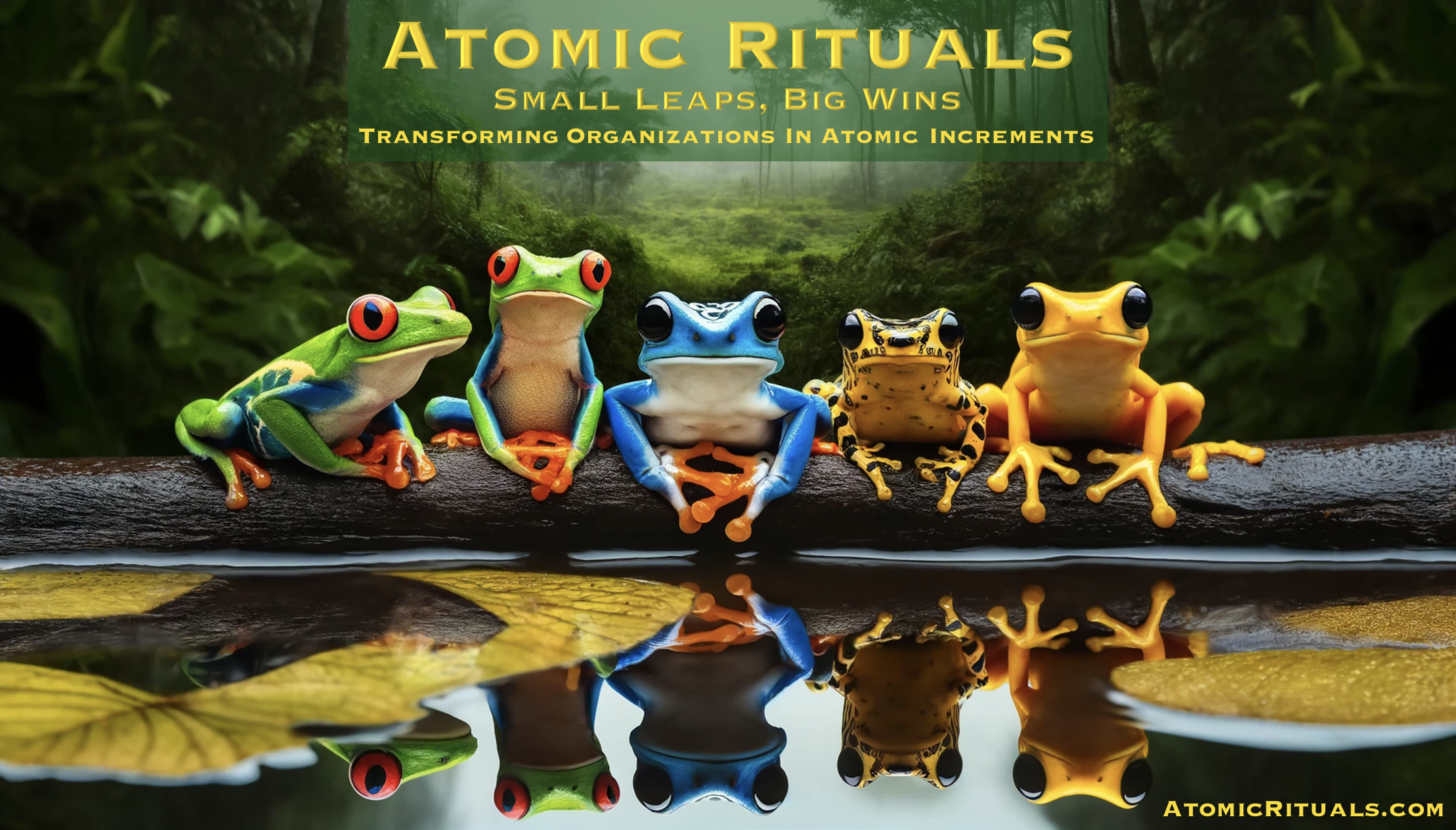
5 frogs on a log, one decides to leap, how many are left?
You might think: 4.
However, likely 5 will be left on the log. Deciding to leap is easy; actually taking the leap is hard.
Imagine you want 5 unique frogs to leap simultaneously into the same unknown puddle.
In Atomic Habits, James Clear makes it clear that it is really hard for us to change our habits as individuals. He walks the reader through small, atomic changes that are easier to adopt and add up to life-changing experiences. It’s a phenomenal book that I’ve already consumed three times – each time gaining a better understanding. His approach and suggestions mirror but also extend things I’ve helped individual leaders and executives with.
Much as with Atomic Habits for individuals, tribes within an organization adopt new rituals more effectively if they are introduced in small, atomic, increments. An organization or tribe’s Rituals define its identity and culture while determining its ability to succeed.
Here we explore Atomic Rituals. Rituals are behavioral patterns of a group, tribe or organization. Organizational change is especially challenging as you’re attempting to change the behavior of mostly diverse groups. However, change is vital to not only survive but thrive in today’s changing world. Understanding existing habits and rituals and why they exist. Leveraging “Powerful Questions” enabling understanding what rituals already exist in an organization, what led to those rituals coming about and how deeply ingrained. These questions are explored using 5 whys analysis in service of enabling organizational transformation.
As Artificial Intelligence increasingly integrates into our workflows, these group behaviors and rituals must adapt once again. Collaborating effectively with AI requires more than just technical skill; it demands conscious, intentional practices. Just as Atomic Rituals shape human collaboration, a new discipline is emerging to guide our partnership with intelligent systems: AI Whispering. This practice focuses on engaging AI not through simple commands, but through iterative refinement, contextual guidance, and reflective learning—essentially, applying the principles of atomic, incremental improvement to our human-AI interactions. Explore the frameworks and practices of AI Whispering at AIWhispering.ai.
Table of Contents
- Atomic Rituals: Small Leaps, Big Wins
- Key Differences – Atomic Habits (Individual) vs. Atomic Rituals (Group/Team)
- Lean Startup Approach Applied to Rituals
- My Journey of Beating the Odds and Changing Rituals
- Atomic Rituals: Create, Modify, and Customize Them
- Key Meta Rituals
- Molecular Rituals
- Atomic Rituals in Sports
- Similarities / Differences: Rituals and Agile Ceremonies
- See Also (additional resources)
Historical Context:
“You do not rise to the level of your goals. You fall to the level of your systems ” – James Clear, Atomic Habits. In systems engineering, the practice of incremental and iterative development has long been recognized as the most resilient and effective path to building complex, scalable, and reliable systems.These methodologies emphasize evolving systems through repeated cycles (iterations) and building upon previous versions (increments), allowing for continuous refinement based on feedback and testing. This echoes a central theme at Atomic Rituals: that systems, not intentions, determine outcomes—whether in software, business processes, or human behavior.
- Early Adoption (1950s-1960s): Iterative and incremental development practices date back to the mid-1950s. For instance, in 1968, Randell and Zurcher at IBM’s T.J. Watson Research Center described and recommended iterative development approaches. See History of Iterative and Incremental Development.
- NASA’s Systems Engineering: NASA’s Systems Engineering Handbook underscores the iterative nature of the engineering process, highlighting that as system knowledge deepens, processes are reapplied to refine requirements and interfaces. See SEH 2.0 Fundamentals of Systems Engineering.
- Systems and Software Engineering—System Life Cycle Processes (ISO/IEC/IEEE 15288:2023), emphasizes that the life cycle processes it defines can be applied iteratively and concurrently to systems and recursively to system elements. This approach allows for continuous refinement and adaptation throughout a system’s life cycle. See International Council on Systems Engineering
Key Differences: Atomic Habits (Individual) vs Atomic Rituals (Team/Group)
| Conceptual Area | Atomic Habits (Individual) | Atomic Rituals (Group/Team) |
|---|---|---|
| Agent of Change | One person, accountable for their own change. | Multiple people, requiring shared ownership and alignment. |
| Identity Layer | “I’m the kind of person who…” | “We’re the kind of team/org that…”—identity must be co-created and reinforced. |
| Behavioral Triggers | Cues shaped by environment or emotion. | Rituals embedded in workflow, culture, or meetings—social and systemic triggers. |
| Feedback Loops | Personal reflection or habit tracking. | Team retrospectives, dashboards, peer feedback—requires ritualized, shared review. |
| Reinforcement | Intrinsic motivation, small rewards. | Recognition rituals, visible progress, shared wins and celebration. |
| Resistance/Failure Modes | Procrastination, perfectionism, lack of willpower. | Misalignment, ambiguity, power dynamics, competing incentives, silos. |
| Adaptability | Adjust based on what works for the individual. | Must flex around diverse needs, roles, and rhythms—requires structured feedback. |
| Measurement of Progress | Habit streaks, goal proximity, subjective well-being. | KPIs, leading/lagging indicators, qualitative shifts in behavior or trust. |
| Autonomy | Full autonomy (ideally). | Shared autonomy—requires psychological safety and clarity of decision rights. |
| Complexity | Linear(ish): build on yesterday. | Emergent and dynamic: yesterday’s success may not repeat due to changing context |
Implication: Individuals Can Optimize, Teams Must Harmonize
• Individuals can optimize habits for personal growth without needing others’ buy-in.
• Teams, however, must co-create rituals to align around shared goals, values, and definitions of success—this makes rituals more powerful, but also more fragile.
The Collective Amplifier
In Atomic Rituals, the power of incremental change is amplified by:
- Collective reflection
- Distributed ownership
- Cultural contagion
- Purpose alignment across functions
And yet it’s also made more challenging by:
- Miscommunication
- Saboteurs (internal or interpersonal)
- Context-switching across individuals and time zones
- The friction of early adoption before a ritual becomes embedded
A Nuanced Frame
While Atomic Habits is about what you do when no one is watching, Atomic Rituals is about what we do when everyone is watching – and how to move together, deliberately.
Lean Startup Approach Applied to Rituals
At The Lean Startup (IMVU), Eric Ries’ notion of 5 whys and MVPs (Minimal Viable Products) was put into practice with focus on improved product delivery. In my time there, I started applying that to process and organizational changes as well. My journey into helping engineering teams be more effective started when I was an architect for the world’s first integrated software development environment Maestro.
My Journey of Beating the Odds and Changing Rituals
I have always struggled with self-promotion as I believe a fair amount is up to luck, a lot is up to others I’ve worked with, and much is related to how well I know how to pick potential winners. Nonetheless, I’ve been encouraged to share my track-record as it seems unusual and lends credence to the things I’ve learned along the way and have been asked to share.
My journey has spanned decades of observing, modifying, creating and carrying forward rituals. I’ve been fortunate to work with amazing teams in 11 companies that have disrupted various industries and survived. Three filed for IPO and three were acquired. Seven achieved valuations of over $1B. I’ve also coached players and sports teams to winning nationals and competing in world championships.
In terms of beating the odds, the practice of recognizing fear as healthy and panic is deadly has applied in almost all of those cases. That mindset allowed us to find success after existential threats to the point of barely being able to make a final payroll. That includes a BroadVision that later achieved a $26B valuation. These existential survival moments are often rites-of-passage that enable success. See also the Weathering Storms Ritual.
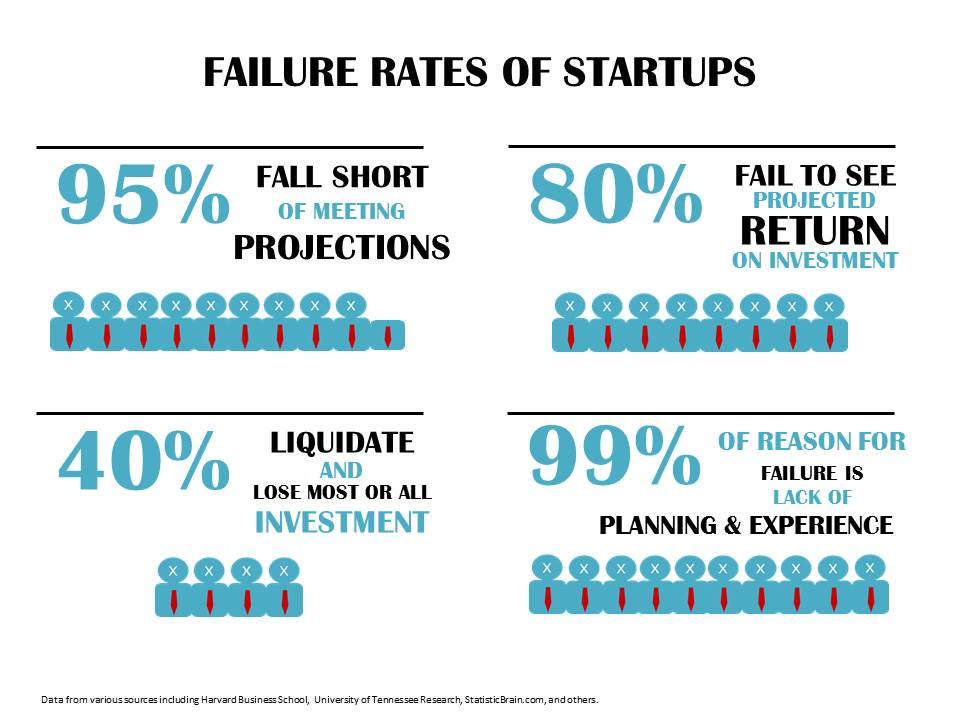
- Startup Success Rates: Approximately 90% of startups fail, indicating that only a small percentage ever achieve significant milestones. For those that do, the journey to high valuations is fraught with risk and challenges.
- Unicorn Statistics: Data shows that only about 1% of startups that secure seed funding reach “unicorn” status, defined as having a valuation of $1 billion or more.
- I’ve been very fortunate to have been at 11 disruptive tech companies that made it from startup to survive where seven achieved unicorn status.
Successful Companies I Helped Beat the Odds
When I talk about my journey, it’s sometimes met with skepticism given how high the odds are against a startup surviving let alone succeeding. So, I put together an Against All Odds note to dive into that.
- Softlab, GmbH – joined as an early-stage startup. I was architect for the World’s 1st Integrated Software Development Environment which began my journey of learning what makes software teams succeed. Initial acquisition by BMW was at $300M valuation or $8.2B in today’s dollars.
- Cooperative Solutions – joined as an early-stage startup. Most funded tech startup in Silicon Valley at that time. Acquired by Bachman Information Systems for undisclosed amount.
- Informix, Inc – joined as a mature company. It was acquired by IBM for $1B or $1.7B in today’s dollars.
- BroadVision, Inc. – joined as an early-stage startup (on its last dime). Reached profitability before filing for IPO as the second fastest growing company on Nasdaq during dot com. It achieved a $26B valuation (or $47B in 2024 dollars).
- Taught K-8 to give back. Re-entered tech to prove to myself I could start fresh and climb.
- Intuit, Inc. – I joined mature company as an individual contributor. Later, as Director, Eng, led internal startup to build QuickBooks Online. Current Valuation $175B.
- Yahoo – joined as a mature company. Lead world’s largest casual gaming platform. Yahoo’s peak valuation was over $125B.
- IMVU (now Together Labs) – joined as a mid-stage startup. Aka “The Lean Startup” Still going and being coached/advised by myself. It has raised a total of $77.6 million in funding. The Lean Startup methodology builds startups using continuous innovation. Held Key-Note talks on Lean Startup Methodology.
- Twitch – joined early-stage as EVP, Eng. Acquired by Amazon. Current Valuation $45B.
- Pure Storage – joined as a mid-stage startup Pre-IPO. Filed IPO. Current Valuation $16B.
- Prosper Marketplace – joined late-stage startup as EVP, Eng Pre-IPO. Filed for IPO, still pending. Changed Rituals that saved the company, As of 2024, Prosper Marketplace has originated over $25 billion in loans.
- Hum Capital – joined early-stage startup as EVP, R&D. Now profitable and still growing. It has deployed $165M in capital to date.
Atomic Rituals – Create, Modify and Customize Them
“Best Practices” are coalesced from things that have worked or not worked into a set of practices generally introduced either top-down or from external consultants as sweeping reforms. These sweeping reforms are typically met with resentment and resistance. They may be adopted, but rarely with enthusiasm. They are seldom effective due both to a lack of acceptance and because they haven’t carefully been customized to specific teams and situations.
In Contrast, Atomic Rituals are small aspects of how a team operates and are integral to the identity and culture of a team. To be optimal, they must vary from one team to another even within the same larger organization. , incremental improvements to the rituals that teams (tribes) already use.
Rituals that Grew Companies to 10x, 100x, 1,000x…
Not everything is as easy as it appears. A group of ducks swimming calmly against the current may actually be exerting a lot of energy and coordination with each atomic paddle stroke below the surface in order to move uniformly in the same direction. So too, many companies may have seemed to effortlessly achieved success while a different truth was unfolding below the surface before they got there.

I have observed, created, enhanced and carried forward various rituals on his journey with the various companies above. Some of these are captured as blog-posts on this site, others have been captured or taught but not yet available here. No two situations or organizations are the same. What works for one will not work the same for another. In fact, one helps one could be destructive to another. Learning which rituals to introduce and refine (and how) to each unique organization is a ritual.
Ritual of Rituals – an Example

To illustrate some differences between how best practices or agile ceremonies are often introduced and the atomic introduction of a new ritual, I reflect back on arriving as the new VP of engineering at a company where a new agile framework had been introduced very rigorously. The agile coach had meticulously prescribed to every team exactly how every ceremony needed to be performed. After they felt they had done their job and left, I arrived to find a very confused and unhappy engineering team.
The teams were reluctant to complain because they were told this is the way it had to be. After gaining some trust, one engineer told me that everyone felt it was better the old way. When I asked for just one example of something that wasn’t working, they said the daily standup.
The Why of a Ritual
I asked if they knew why they were doing stand-ups. The answer was simply because we were told we had to. When I asked what they believe stand-ups were intended to solve for, they didn’t know. Without a value, a purpose, a job-to-be-done, the adoption of a change is rarely embraced. Much like building an MVP feature, there should be a hypothesis of what a change to how things are will impact in a positive way. Ideally, it should be clear how that will be measured. However, sometimes just recognizing that it’s working goes a long way.
I suggested we look the basic “What I did yesterday, What I’m doing today and I’m (not) blocked.One desired outcome was Early Problem Identification: If at the end of a day, an engineer was stuck on something, the fact that they were stuck would come out the next morning an hopefully, someone would help. Additionally, if someone said yesterday they were going to work on X and in today’s update we learned they worked on Y, we might follow-up to ask why they changed their intention and discovered someone had back-doored in some work.
The Experiment
Once you know the desire impact or outcome, you have a hypothesis as to what will result from introducing a change. I told the team we were going to experiment with the standup for two-weeks. At the end, I’d ask if they felt the stand-up had the desired outcome.
The Empowerment
If it completely missed the mark, I suggested we could stop doing stand-ups. That brought looks of shock and “Wait, we could do that?” I said, yes, if you can demonstrate it’s not adding value, why do it? I also suggested that we could change the ritual to doing stand-up Monday, Wednesday, Friday to see if that was better, or make any other adjustments they felt have better results. Now the team was empowered to adopt changes that they could see were helpful and abandon ones that weren’t adding value. They also could and should adapt rituals to what worked best for the team.
The Challenge
Taking this approaches poses a challenge to a leader that wants to introduce a change. They need to sell it and prove it’s value if they want it to stick. Intuit used to call that “sell versus tell.” If you’re introducing something novel, it can also help to choose the right team to start with. Much as new products are often targeted at “early-adopter” customers, so too are there advantages to finding “early-adopters” internally.
How a New Ritual Gets Accepted as Part of a Tribe’s/Team’s Identity
When a team understands the value and experiences the empowerment of being able to customize rituals to the challenges they face and the make-up of their team, the rituals become specifically theirs. When I worked with five different teams at IMVU (aka The Lean Startup), each team had very different rituals – each they had made their own. I will later explain the differences and why having differences was much more effective than applying the same ceremonies or best practices across all five team.
Each team had made how they work unique to their needs and makeup. It became part of an identity they felt proud of and felt ownership for.
Is the Asylum Run by the Inmates?
Eyebrows may be raised that this could be taking servant leadership to an extreme. After all, “servant leadership” isn’t about being a servant to your team. It’s about doing things in service of your team. What’s the difference? The term “servant leadership” includes the word “leadership”. An effective leader challenges their teams and team members to step outside of their comfort zones and take on new challenges that will help them grow. It’s not about being nice, it’s about being kind. More on that later too.
Meta Rituals
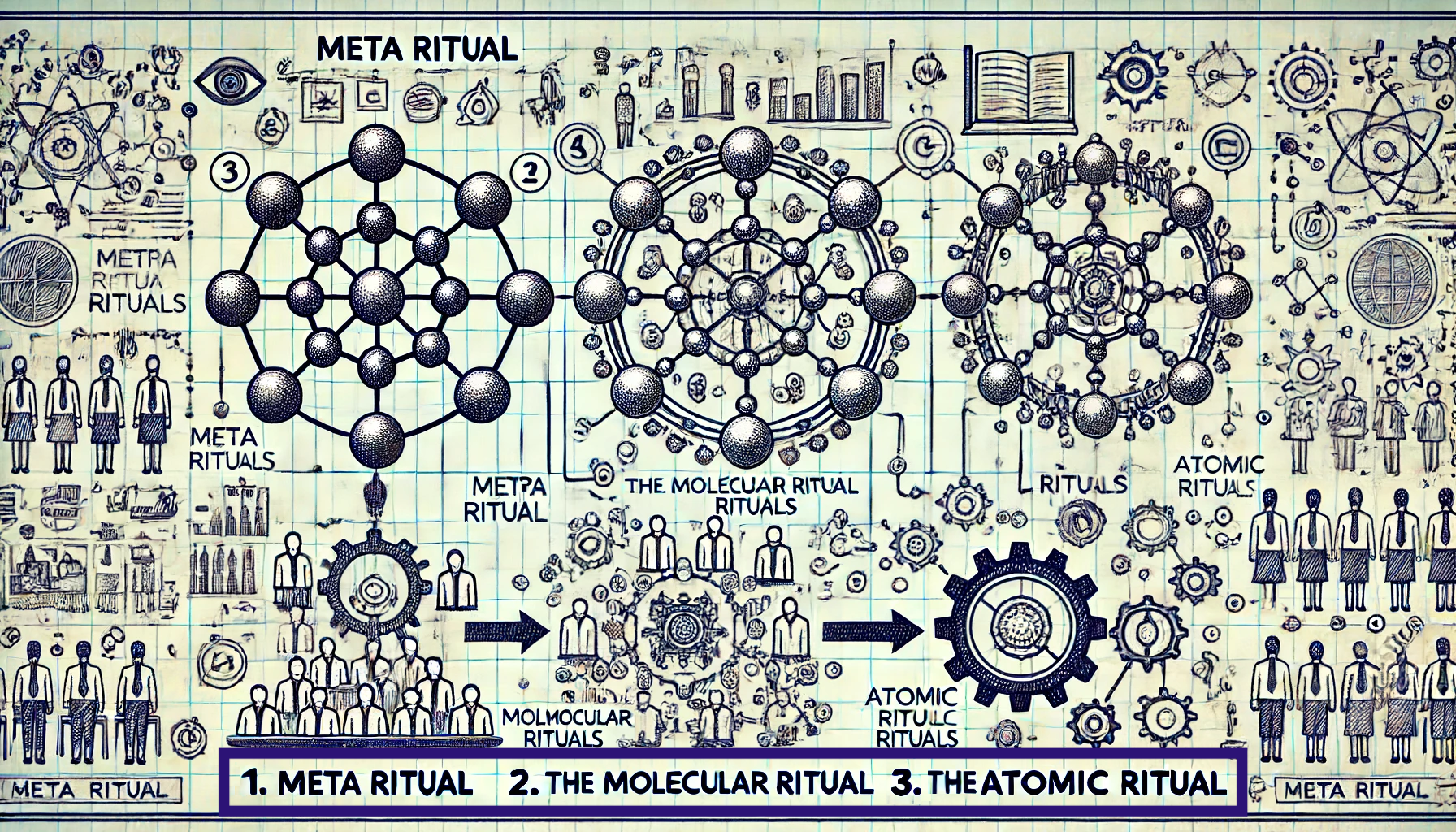
Meta Rituals are both the rituals to establish and modify new and existing rituals while also broader rituals that provide the framework and structure for more atomic rituals. When introducing or modifying an atomic ritual, it’s good to have a ritual to do so and it’s good to also know how the atomic ritual fits into the bigger picture. Imagine the meta ritual is to be able to climb each of the Seven Summits. Having that in mind could inform the atomic habit of using the stairs instead of the elevator.
- The First 90 Days Ritual – This is like an Uber-Meta Ritual. Whether joining as a full-time employee, or a long or short-term advisor/consultant/coach, there are ways to observe and learn about existing rituals, finding early-adopter teams eager to experiment with changes and customize the rituals to begin the journey of evolution.
- Ritual of Rituals – Developing and evolving Rituals and how they differ from “Best-Practices”For Change Adoption of Rituals – Introduce minimal viable rituals with declared hypothesis of the impact. Revisit in 2-week retros to check impact and allow for changes or toss-out.
- E Pluribus Unum Rituals – Out of many, one – rituals to take teams built by individuals hired as experts in their role and creating an organization that functions cohesively as though it was one organism. For example, thinking of the “All Hands Meeting” as speaking to the “hands” who are doers and re-envisioning it as an “All Minds Meeting” or an “All Hearts and Minds Meeting.” This can remove us-and-them sentiments, that can be especially strong after cost-reductions, and converting the environment into one where everyone is actively and passionately engaged. For this, see also: The Fifth Discipline – The Art and Practice of the Learning Organization by Peter M. Senge.
- Customizing Rituals – Effective rituals for one team need tweaking to work for another. At IMVU, I had 5 teams using 5 different software development methodologies – each as what worked best for them.
- Weathering Storms Ritual – Most companies will face storms. This is especially true for companies trying to develop disruptive technological solutions to old problems.
- Cost-Cutting Rituals – Faced with paradigm shifts in the market or unforeseen obstacles, companies often realize they must cut costs. Done wrong, this can be the first step towards failing as a business. Done right, it can become a rite of passage that leads a company to not only surviving but thriving. “Bad companies are destroyed by crises. Good companies survive them. Great companies are improved by them.” – Andy Grove
- 5-Why Rituals – The well-known practice of 5-Whys in post-mortem root-cause-analysis is mostly understood. However, there is not only room for improvement and adjustment, but also value in applying this approach when prioritizing or in finding optimal solutions.This ritual can also help find the core objective or value a business or feature is seeking to impact. Factor Analysis is another valuable angle of root cause analysis.
- 5-Hows Rituals – Much like the 5_whys approach, 5-Hows helps get to the core of the optimal way to approach a challenge or build a solution
- Code, Design, RFP Review Rituals – The critique involved in such reviews often leads to defensiveness and hence losses effectiveness. Simple tweaks lead to much more effective review comments and suggestions.
- Radical Candor Rituals – Radical candor delivered as a gift is valuable to others and to ourselves
- Process Improvement Rituals – There is usually resistance to process improvement and processes that worked in one environment can fail in another. How they are introduced and adapted will make a big difference.
- Organizational Design Rituals – Building T-Shaped Teams, meta and team backlogs, etc
- Systems Architecture Rituals – especially when building disruptive tech, building resilient and adaptable systems will help your business grow while finding the optimal solutions
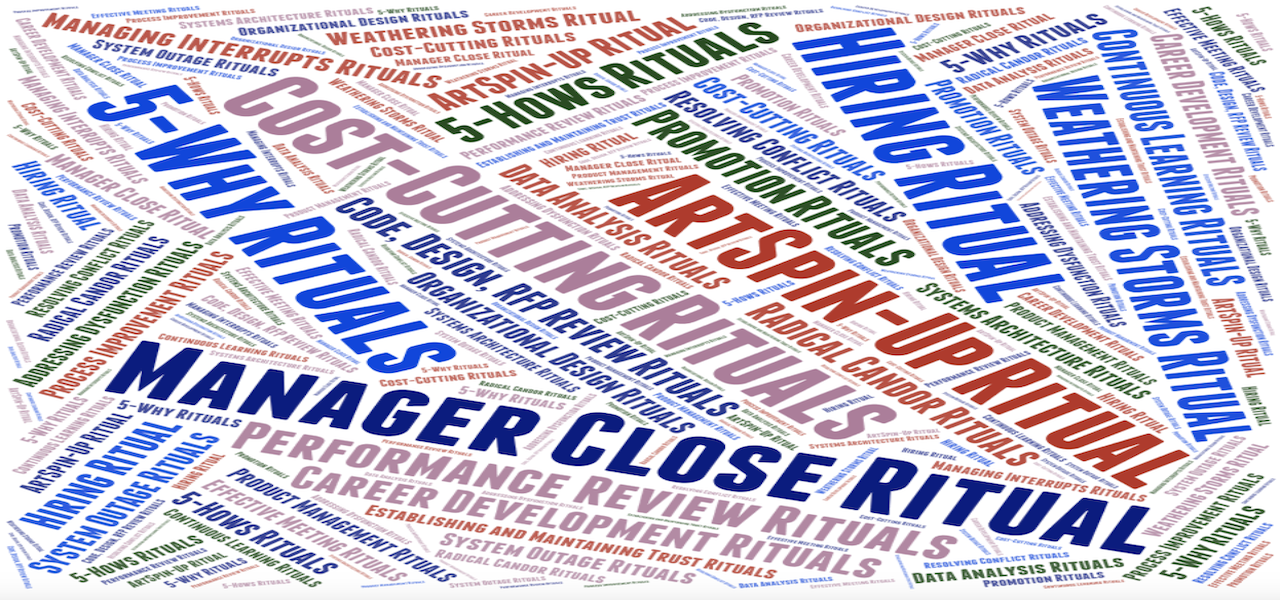
Molecular Rituals
These are some individual rituals that have seen the tests of time in helping companies succeed while having been customized, extended and carried forward. Each molecular ritual also breaks down into more atomic rituals that can be customized and adopted individually and incrementally. I iterate some of these Molecular rituals that I has observed, created, adopted, enhanced, customized, carried forward and continuously changed. I’ve practiced and seen put into practice all of these at companies that became highly successful. I’ve written and/or spoken about all of these an more. I will share them, not to adopt blindly as Best Practices, but as examples and variants of what has served others well such that each new organization, team, or tribe can choose which aspects resonate best with them and then begin the process of making them their own. I will update links to documented rituals below. Note, the documentation itself has it’s own ritual of continuous imrpovement.
A List of Molecular Rituals
- Hiring Rituals – Finding and assessing which people hold the characteristics of 10x contributors
Breaking this down into Atomic components- First Contact Rituals – In sourcing, first impressions matter and how to
- Tailored Interview Rituals – interview questions and processes designed to explore less what someone know and more why they know it (IQ, EQ, and AQ) as resilience, growth mindset, and curiosity continue to become more important in a rapidly changing world.
- Interviewer Training and Certification Rituals – In recognizing the importance of finding and hiring the right people, the importance of training, shadowing and certifying select interviewers on specific interview questions is invaluable.
- Manager Close Ritual – The manager close is a distinct and critical aspect of hiring top candidates. Having repeatedly had the experience in a manager close of candidates telling me the conversation with them changed how they see themselves, their careers and their own purpose is rewarding and repeatable.
- Spin-Up Rituals – On-boarding valuable new hires to help them contribute to culture and success – this too breaks down into atomic component rituals.
- Data Analysis Rituals – Data by itself can be misinterpreted, understanding what the data is telling us is crucial
- Career Development Rituals – Including choosing between different options and paths
- Continuous Learning Rituals – Consuming audio books at 3-4x etc
- Product Management Rituals – Finding product market fit and enabling engineering to arrive at optimal solutions
- Performance Review Rituals – Provide advice, not feedback – Provide forward looking opportunity rather than reprimands for past things that can’t be changed
- Promotion Rituals – Not everyone is suited for or will enjoy working in another role. Provide opportunity to try-before-you-buy
- Resolving Conflict Rituals – Conflicts arise and are healthy in any relationship private or at work.
- Addressing Dysfunction Rituals – Few, if any, organizations (much like families) exist without some form of dysfunction. Left unaddressed it can be crippling if not fatal.
- Managing Interrupts Rituals – Managing and prioritized unavoidable, unplanned priority work
- Establishing and Maintaining Trust Rituals – This starts with understanding what is mean by trust – trust in integrity or trust in ability? Understanding how trust is gained, lost and regained is crucial in any dynamic organization hoping to survive and thrive after facing challenges.
- Effective Meeting Rituals – including assessing and addressing engagement
- System Outage Rituals – when outages occur, there are often mad scrambles to react. There are established approaches, that can be tuned to fit your business, established by organizations such as FEMA.
- Writing Rituals – Whether customer facing or internal documentation or even blog posts, there are rituals to continuous improve documentation and the documentation processes.
Atomic Rituals in Sports
Sports Teams are also a form of tribes with rituals they have adopted. I’ve been able to help two teams win national championships, but the most dramatic change was coaching a team of novices and taking them to their first tournament where they nearly upset last year’s national champions in their very first game.

After breaking my collarbone, the spouses/partners of the players of my Ultimate team asked me to coach them. Three months later we flew to their first tournament and were matched up against last year’s U.S. national champs. Our team shouldn’t have completed a single pass, but at half time it was tied. At the end, we lost by one.
I inspired them to play with confidence and earning their trust to try out totally unorthodox defensive and offensive strategies. We switched between zone and person coverage within a point (previously unheard of). We mixed playing zone coverage in the front and person in the back. Our players confidence allowed them to try these things. The effectiveness against the confused champs became a virtuous cycle for our team’s confidence. It became a negative spiral for the opponents.
A novice team rattled veterans with tactics no experienced player would consider. Their confidence had been robbed and shifted it to our team – finding myself again as villain here. The balance shifted resulting in a totally unexpected outcome. The veteran team eventually regained their confidence to win the tournament. I was approached by other teams about coaching them or helping them understand what we had just done.
Similarities / Differences: Rituals and Agile Ceremonies

Rituals and ceremonies are both behaviors that play crucial roles in defining the culture and identity of a team or tribe. In the context of agile frameworks such as Scrum, these concepts share similarities but also exhibit distinct characteristics.
Similarities:
- Purpose and Structure:
- Both rituals and ceremonies serve to create a sense of order and predictability within a group. In agile frameworks, ceremonies like the daily stand-up or sprint review are structured events with specific purposes, much like rituals.
- They provide regular touch-points for the team to gather, communicate, and align on goals, fostering a cohesive work environment.
- Cultural Reinforcement:
- Rituals and ceremonies reinforce the values and norms of the group. In Scrum, ceremonies emphasize values such as transparency, collaboration, and continuous improvement, which are core to agile principles.
- Both practices help embed these values into the daily behavior of the team, shaping its culture.
- Identity and Belonging:
- Participating in shared rituals and ceremonies fosters a sense of identity and belonging among team members. In agile teams, regular ceremonies help build a shared understanding and a collective sense of purpose.
Differences:
- Formality and Flexibility:
- Ceremonies: In agile frameworks, ceremonies are formal, predefined events with specific agendas and outcomes. For example, the daily stand-up has a strict format and is time-boxed to 15 minutes.
- Rituals: Rituals can be more flexible and organic, evolving naturally over time. They may not have a strict format or agenda and can vary significantly between different teams or tribes.
- Origins and Evolution:
- Ceremonies: Agile ceremonies are defined by the framework (e.g., Scrum) and are implemented as part of adopting the methodology. They are usually introduced when the team begins practicing agile.
- Rituals: Rituals often develop organically within the team or organization. They may arise from specific team needs, traditions, or even individual preferences and can change as the team evolves.
- Scope and Context:
- Ceremonies: Agile ceremonies are directly related to the workflow and processes of the team. They are designed to support specific activities such as planning, reviewing, and reflecting on work.
- Rituals: Rituals can extend beyond work processes to include social interactions, team-building activities, and other cultural practices. They help build relationships and a positive work environment but may not always be directly tied to specific tasks.
Example:
- Daily Stand-Up (Ceremony): This is a structured, time-boxed meeting where team members update each other on their progress, plans, and obstacles. It is a formal part of the Scrum framework designed to facilitate communication and transparency. However, it can also become a ritual uniquely tuned to the specific identity and culture of a team.
- Team Lunch (Ritual): A weekly team lunch could be a ritual that helps team members bond and build relationships. It is less formal and not mandated by the agile framework but serves to enhance team cohesion and morale.
Stay Tuned – More to Come
I have written about and implemented, customized all of the rituals above.
Those I haven’t linked yet are in various formats, locations and states of completion.
They will be added above as I bring them under one roof.
All these rituals and my writing about them are
continuously, incrementally evolving as I learn.
See Also
Throughout my career, I’ve read/listened to many books on leadership and organizational efficiency. A sample of books I’ve consumed is here. I trained myself to listen to audio-books at 3x to 4x as it foces me to focus on the content. I have found I absorb more of the content that way than if I listen at “normal” speed or read printed books. Note, that’s works for me as an auditory learner. My Strength-Finders results indicate that my primary passion and strength is for learning. My secondary strength is “Achiever”; so, it’s not surprising that I have a love for learning about achievement. Beyond learning about it, I also love to share my knowledge. The following excerpt is from Gallop’s analysis of my results:
- “You enjoy partnering with intelligent people. You like to exchange information, share observations, or offer tips for doing things more easily, efficiently, or swiftly. You are happiest collaborating with individuals who are not stingy with what they know
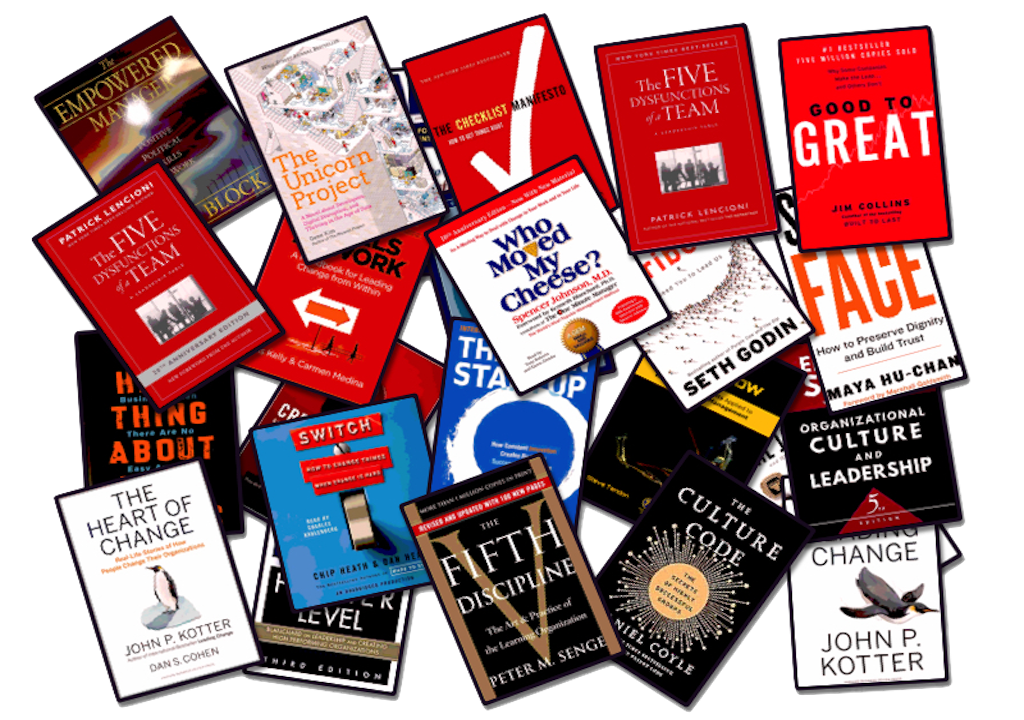
Books Relevant and Complimentary to Atomic Rituals
Note, the books below is a small sampling of books consumed, often more than once, to specifically benefit in systemically understanding and incrementally improving rituals within teams and organizations. A longer list, though also not entirely current can be found here.
Atomic Habits by James Clear
An Easy & Proven Way to Build Good Habits & Break Bad Ones. While this book specifically address the habits we hold and live by as individuals, many of the concepts and approaches can be extrapolated to apply to teams and organizations. This is especially true for teams and organizations that have matured to a point of functioning as one entity or organism comprised of symbiotic/complimentary members.
Leading at a Higher Level by Ken Blanchard
Emphasizes on continuous improvement and developing leadership at all levels with an incremental approach
Organizational Culture and Leadership by Edgar H. Schein
Discusses the role of leaders in shaping culture through consistent, small actions and rituals.
Primal Leadership by Daniel Goleman, Richard E. Boyatzis, and Annie McKee
Focuses on the role of emotional intelligence in leadership. It stresses the importance of incremental, emotionally intelligent interactions in shaping a supportive and effective leadership style.
The Dichotomy of Leadership by Jocko Willink and Leif Babin is interesting because it seems to have notably fewer readers than their first book “Extreme Ownership” and yet a primary focus of the second book is to correct for nuances missed in the first. The Dichotomy emphasizes the importance of balance in leadership actions. Suggesting that small, balanced adjustments in leadership style can lead to significant, positive changes in team dynamics and performance.The book’s focus on balancing dichotomies suggests that leaders must adapt their behaviors incrementally, depending on the situation. This adaptability is a key aspect of “Atomic Rituals,” where small, context-sensitive changes drive overall improvement.
Better Thinking, Better Results: Case Study and Analysis of an Enterprise-Wide Lean Transformation by Bob Emiliani
Emphasizes the importance of continuous improvement through small, incremental changes. Lean principles advocate for identifying and eliminating waste, improving processes bit by bit.
The Checklist Manifesto – How to Get Things Right by Atul Gawande
The use of checklists breaks down complex tasks into smaller, manageable steps, ensuring that each step is completed correctly. Gawande emphasizes the importance of a systematic approach to complex tasks, using checklists to ensure no steps are overlooked.
The Unicorn Project – A Novel About Developers, Digital Disruption, and Thriving in the Age of Data by Gene Kim
Highlights the need for continuous improvement and small, iterative changes to drive progress. The protagonists implement DevOps practices and agile methodologies, which focus on incremental improvements.
The Book of TameFlow: Theory of Constraints Applied to Knowledge-Work Management by Steve Tendon
Tendon advocates for identifying and addressing constraints in knowledge work processes through small, manageable changes. This iterative process ensures that the most critical issues are tackled first, leading to continuous improvement.
The Fifth Discipline by Peter Senge
Introduces the idea of the “learning organization,” where teams are continually learning and evolving together. Senge emphasizes the importance of systems thinking, which views the organization as a complex, interrelated system where the whole is greater than the sum of its parts.
- Personal Mastery – small, incremental changes to their behaviors and practices.
- Mental Models – small, new rituals, to shift and improve team perspectives and processes
- Shared Vision – ensuring movement in one direction through consistent, small actions.
- Team Learning – fostering an environment of collaboration and continuous feedback.
- Systems Thinking – small changes with significant impact on the larger system
- Empowerment and Engagement – encouraging/enabling personal and collective growth
The Culture Code by Daniel Coyle
Explores how successful groups create a sense of belonging and shared identity. He emphasizes the importance of creating safety, sharing vulnerability, and establishing purpose. These elements foster a strong collective identity and make the team function seamlessly as a unit.
The Empowered Manager: Positive Political Skills at Work by Peter Block
Emphasizes small actions to build political skills and drive change aligns well with the concept of incremental organizational transformation.
Saving Face: How to Preserve Dignity and Build Trust byMaya Hu-Chan
Preserving dignity through small, respectful actions
Rebels at Work: A Handbook for Leading Change from Within by Lois Kelly and Carmen Medina
Leading change from within through incremental actions
Tribes by Seth Godin
Explores the idea of leadership and community-building within organizations, emphasizing the importance of forming tribes. Within these tribes, rituals play a crucial role in defining and reinforcing group identity, cohesion, and culture.
Dare to Lead by Brené Brown
Highlights the importance of vulnerability and courage in leadership, similar to how “Atomic Rituals” encourages leaders to embrace small acts of openness and honesty to build a strong, trust-based organizational culture.
The impact of small, consistent acts of vulnerability and authenticity in creating a resilient and transparent leadership culture.
Leaders Eat Last by Simon Sinek
Discusses how leaders who prioritize their team’s well-being create environments of trust and cooperation to focus on building a supportive culture through small, consistent acts of care and leadership.
Supernormal – The Untold Story of Adversity and Resilience by Meg Jay
Explores the concept of resilience and how individuals can overcome significant challenges and adversity to achieve remarkable success. This theme aligns with the concept of “Atomic Rituals” in several meaningful ways:
- Overcoming Adversity Through Small Steps
- Building Resilience through Continuous Improvement and Adaptability
- The Power of Rituals and Habits
- Coping Mechanisms and Adaptability
Leading Change by John P. Kotter
Outlines his eight-step process for leading change in organizations, which has become a foundational framework for change management.
Switch: How to Change Things When Change Is Hard by Chip Heath and Dan Heath
Delves into the psychology of change, exploring how to harmonize the rational and emotional aspects of the human mind to drive successful change.
The Hard Thing About Hard Things – Building a Business When There Are No Easy Answers by Ben Horowitz
Offers essential advice on building and running a startup – practical wisdom for managing the toughest problems business school doesn’t cover,
Creativity, Inc. – Overcoming the Unseen Forces That Stand in the Way of True Inspiration by Ed Catmull
Reflects on the management principles that built Pixar’s singularly successful culture.
Who Moved My Cheese? by Spencer Johnson and Kenneth Blanchard
A business fable about two mice and two small people in a maze, dealing with change in their search for cheese, which serves as a metaphor for achieving goals.
Good to Great by Jim Collins
Introduces the idea of Level 5 Leadership and the importance of having the right people in the right seats. He emphasizes creating a culture of discipline and humility, which leads to a cohesive, high-performing team that operates with a strong collective identity.
The Five Dysfunctions of a Team by Patrick Lencioni
Discusses the importance of building a cohesive leadership team. He argues that when trust, conflict, commitment, accountability, and results are properly managed, the team functions as a unified entity.
The Heart of Change: Real-Life Stories of How People Change Their Organizations by
John P. Kotter and Dan S. Cohen – Building on Kotter’s earlier work, this book uses real-life stories to illustrate how emotional connections can drive successful change.
ADKAR: A Model for Change in Business, Government and our Community by Jeffrey M. Hiatt
Provides a structured approach to change management, focusing on five key building blocks: Awareness, Desire, Knowledge, Ability, and Reinforcement.
Eleven Rings The Soul of Success by Phil Jackson
Through his rituals of bringing teams together, Jackson led his teams to the ultimate goal: the NBA championship – six times with the Chicago Bulls and five times with the Los Angeles Lakers.
The Lean Startup – How Today’s Entrepreneurs Use Continuous Innovation to Create Radically Successful Businesses by Eric Ries
Describes a method for developing businesses and products that aims to shorten product development cycles and rapidly discover if a proposed business model is viable. The book focuses on creating hypotheses about what the product should be, developing minimal viable products (MVPs) to test these hypotheses, and using customer feedback to iterate and optimize. However, while I worked at the Lean Startup (IMVU) I introduced Atomic Rituals to improve organization processes as well as further improving product development cycles.
What I do outside of full-time leadership roles

Physics as a background

When I went off to the University of Virginia to study, my father suggested a major in physics. Surely there was incentive to carry forward the heritage and become a fifth generation physicist, but what convinced me was what a great foundation it would be for understanding some of the most complex problems in the universe without the presumption of arriving at truths. As physicists, we believe in arriving at theories that approximate the “truth” with a clear expectation that there will come a better, more complete approximation.
I was also inspired by how my father described Einstein who briefly worked with my grandfather Friedrich Dolezalek in Göttingen. My father related stories of Einstein coming over to dinner and being a man with fascinating perspectives on many things beyond the realm of physics.
Einstein’s notion of understanding everything from atoms and particles to the universe served as a great foundation for curiosity and systems thinking in my passion for exploring what makes organizations work effectively – especially when building disruptive tech in times of paradigm shifts.

AtomicRituals.com and HumanTransformation.com are Talent Whisperers® sites.
Addendum:
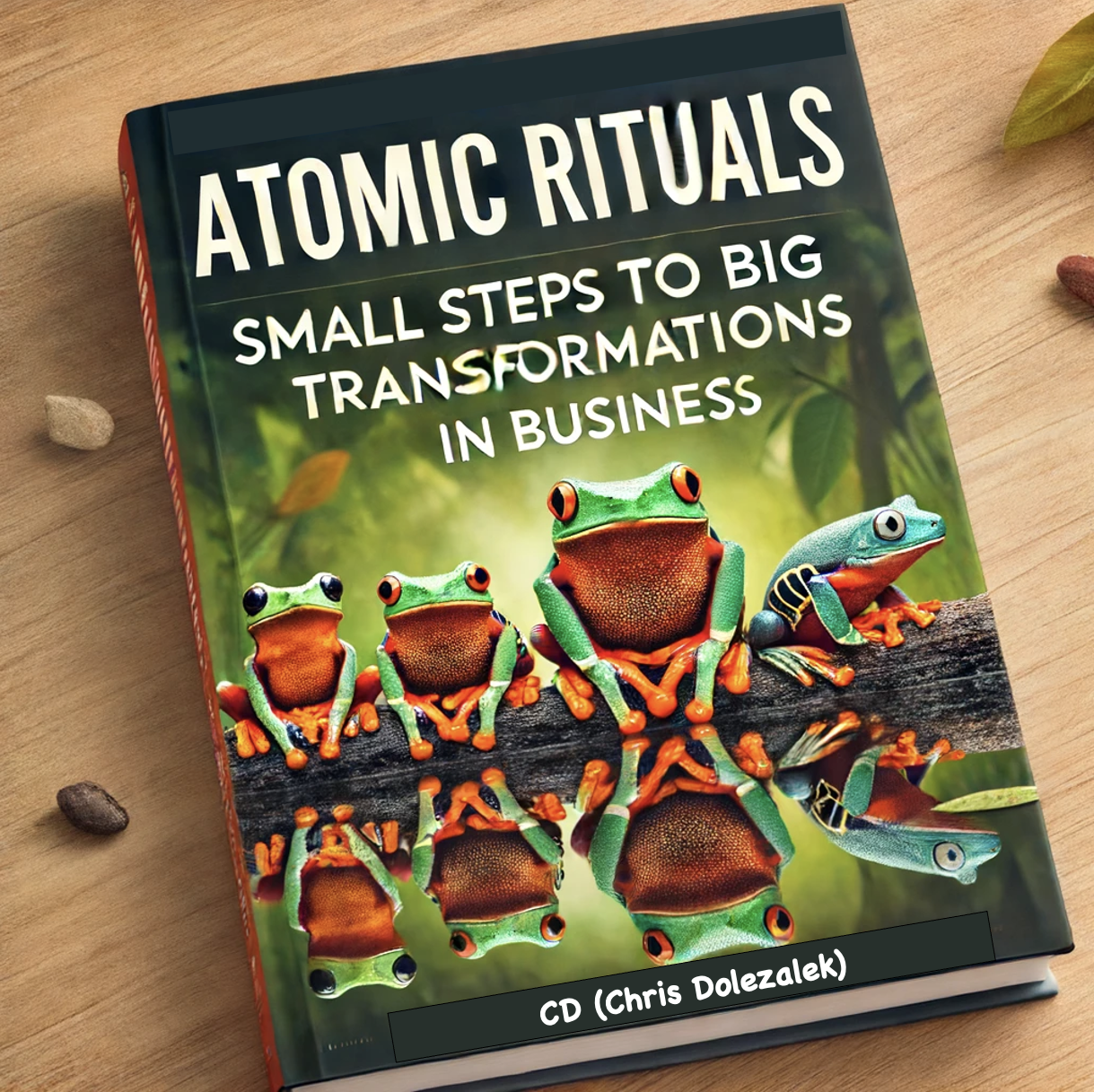
Atomic Rituals as a Book?
I’ve developed rituals and approaches over decades of experience leading success that speaks to incremental improvements, becoming leaders that enable such improvements and hiring and developing individuals that are more adept at helping teams and organizations atomically improve their rituals. I’m in the process of restructuring the content I’ve been working on over the last seven years to capture my experiences and lessons in the form or a book.
Atomic Rituals: Transforming Organizations Through Incremental Change
- Atomic Rituals: Small, intentional actions that create profound, cumulative impact over time.
- Core Idea: How individuals, leaders, and organizations can leverage rituals to evolve, grow, and thrive.
Introduction to Atomic Rituals: Small Steps, Big Impact
In every group, team, and organization, there exists a powerful force capable of transforming the ordinary into the extraordinary. It’s not a grand strategy or sweeping change—it’s the small, intentional practices we embed into our daily lives. These are Atomic Rituals: the micro-actions that ripple outward to create lasting cultural, organizational, and personal transformation.
We’ve long understood the value of habits in shaping individual success. But what about the habits of groups? How do the rituals of leaders, teams, and entire organizations shape their ability to grow, adapt, and thrive in a rapidly changing world?
In Atomic Rituals, you’ll discover how to harness the collective power of small changes to drive monumental growth. By aligning rituals with values, goals, and vision, teams can overcome their greatest challenges—from combating groupthink and fostering trust to navigating crises and embracing innovation.
This book bridges the personal and collective, offering insights into:
- Group Evolution: How rituals guide teams through stages of growth and transformation.
- Leadership Influence: The subtle yet powerful role leaders play in shaping cultures of trust, collaboration, and candor.
- Team Dynamics: The practical rituals that boost motivation, communication, and resilience.
- Cultural Transformation: Using atomic rituals to create regenerative organizations and embed values that stick.
Through actionable frameworks, compelling stories, and real-world examples, Atomic Rituals equips you with tools to design rituals that inspire change. Whether you’re a leader seeking to elevate your team, an individual looking to make an impact, or an organization aiming to evolve, this book will show you how small, deliberate actions can lead to extraordinary outcomes.
Transformation doesn’t happen all at once. It begins with a single, intentional ritual. Let’s start yours today.
Note: From Atomic Habits to Atomic Rituals
James Clear’s groundbreaking work, Atomic Habits, illuminated the power of small, incremental changes in shaping individual behavior and driving personal growth. It showed us that by focusing on the smallest actionable steps, we can overcome inertia, build consistency, and achieve remarkable transformation over time.
Atomic Rituals extends this philosophy from individuals to groups, teams, and organizations. Just as habits define who we are as individuals, rituals shape the identity, culture, and effectiveness of collectives. The power of atomic rituals lies in their ability to align diverse people around shared values, foster trust and collaboration, and create the conditions for collective growth.
Yet the complexity of groups—especially those with diverse perspectives, backgrounds, and goals—makes developing and improving rituals uniquely challenging. Unlike individual habits, which primarily reflect personal behavior, rituals must account for shared dynamics, interpersonal relationships, and cultural nuances. Designing rituals that resonate with an entire group requires a deep understanding of human behavior, team dynamics, and the ability to foster alignment without stifling individuality.
With complexity comes tremendous opportunity
Groups that embrace incremental improvements to their rituals unlock potential far greater than the sum of their individual parts. These small, intentional actions enable teams and organizations to adapt to change, overcome challenges, and thrive in even the most dynamic environments.
Much like Atomic Habits transformed how we think about personal growth, Atomic Rituals provides a roadmap for collective transformation. It’s about harnessing the power of small steps to create lasting impact—not just for individuals, but for the communities and organizations they belong to. The journey may be complex, but the rewards are nothing short of transformational.
 Atomic Rituals