
ACA: Assumption of Comptence and Ability
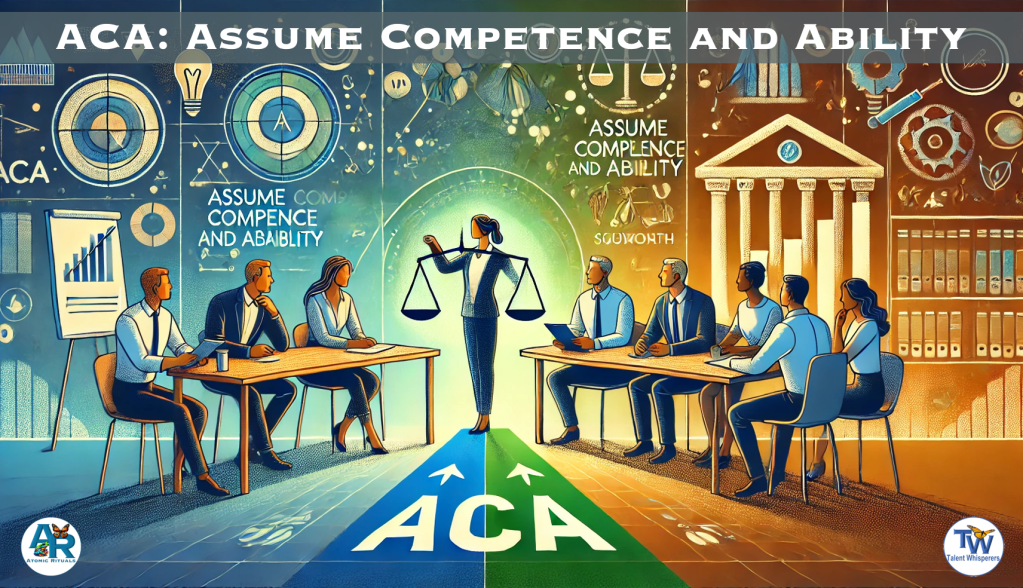
Explanation:
1. Assume Competence and Ability (ACA):
- Encourages the mindset that others are capable and skilled, shifting the focus from blame to curiosity about systemic or contextual factors contributing to sub-optimal outcomes.
- Recognizes the potential of individuals to rise to challenges when given the right support, clarity, and resources.
Why ACA Aligns with Assuming Competence
1. Focus on Curiosity, Not Blame:
- When outcomes are sub-optimal, ACA shifts the narrative from questioning someone’s ability to exploring what systemic or situational factors may have influenced the result.
2. Empowerment and Trust:
- Assuming competence reinforces trust, empowering people to take ownership of their tasks without fear of unjust judgment.
3. Encouraging Problem-Solving:
- By starting from a place of competence, teams are encouraged to focus on solutions rather than assigning blame or micromanaging.
Rituals to Reinforce ACA
1. Clarity Sessions:
Before tasks are assigned, have brief rituals to ensure alignment on expectations, goals, and potential challenges.
2. Retrospectives with Curiosity:
In post-mortem or retrospective meetings, adopt a framework of curiosity rather than critique, asking:
- What assumptions did we make about the task?
- Were there external or unforeseen challenges?
3. Feedback Through Competence Lens:
Frame feedback in a way that assumes competence, e.g., “This outcome suggests there may have been factors we didn’t fully account for. Let’s unpack it together.”
4. Role Clarity Rituals:
Regularly revisit roles and responsibilities to ensure the team understands and leverages each member’s competencies.
Alternatives to ACA
If ACA doesn’t fully capture the idea, here are a few other possibilities:
1. ACT: Assume Capability and Talent
- Highlights the natural abilities and potential of team members.
2. ACE: Assume Competence and Expertise
- Focuses on expertise as a starting point, emphasizing respect for the other person’s knowledge.
3. AIM: Assume Intent and Mastery
- Combines the assumption of positive intent with a belief in the person’s capability to master challenges.
Balancing Assumed Competence with Leadership Realities
While Assuming Competence and Ability (ACA) promotes trust, empathy, and a belief in growth, there are instances where gaps in competence or performance require leaders to make difficult decisions. Navigating these situations effectively involves balancing fairness to the individual with fairness to the team and the broader organizational goals.
1. Recognizing and Defining the Gaps
Leaders must first determine the nature and scope of the gap:
- Skill Gap: The individual lacks the necessary skills or knowledge but has the potential to learn and grow.
- Behavioral or Attitudinal Gap: The issue is not about skills but involves mindset, collaboration, or cultural fit.
- Performance Gap: The individual is underperforming consistently compared to their peers in delivering results or impact.
2. Fairness to the Team and Organization
Investing in an individual’s growth is noble, but leaders must also consider fairness to peers and the organization:
1. Resource Allocation:
- High investment in a single person—time, mentorship, or training—may divert resources from other team members who could benefit equally or more significantly.
- Leaders must weigh whether the energy spent on underperformers could instead help top performers reach new heights.
2. Team Morale and Equity:
- Consistently supporting an underperformer can strain team morale, especially if peers perceive that person as not “carrying their weight.”
- Perceptions of unfair treatment can foster resentment and disengagement among high-performing team members.
3. Balancing Empathy with Pragmatism
Leaders should also recognize external factors or temporary challenges:
- External Life Events: Personal challenges (e.g., health, family crises) may impact performance temporarily. In these cases, demonstrating empathy and offering support can strengthen loyalty and morale.
- Long-Term Patterns: If performance issues persist over an extended period despite support, it may indicate deeper misalignment.
4. The Costs of Replacing Versus Retaining
Before making a decision to replace someone, leaders must consider:
1. Replacement Risks:
- New hires come with inherent uncertainty, regardless of the rigor of the hiring process.
- Onboarding new hires takes time and effort to bring them to parity with the team.
2. Knowledge and Context Loss:
- Replacing someone means losing institutional knowledge and relationships they’ve built within the team.
4. The Costs of Replacing Versus RetainingSteps for Balancing Development and Accountability:
1. Communicate Transparently:
- Clearly outline performance expectations and identify specific gaps in alignment with those expectations.
- Be honest about the potential impacts of their performance on the team and the organization.
2. Create a Growth Plan:
- Set measurable goals and a timeline for improvement.
- Provide resources, mentorship, and regular feedback to help them succeed.
3. Assess Progress:
- Continuously evaluate their improvement relative to expectations.
- If significant progress is not made, leaders must consider whether retaining the individual is sustainable.
4. Leverage Exit as a Positive:
- If it becomes clear that the individual is not a fit, handle the transition with dignity and support. Frame it as an opportunity for them to thrive in a role better suited to their strengths.
5. Approaching Performance Issues Thoughtfully
Steps for Balancing Development and Accountability:
1. Communicate Transparently:
- Clearly outline performance expectations and identify specific gaps in alignment with those expectations.
- Be honest about the potential impacts of their performance on the team and the organization.
2. Create a Growth Plan:
- Set measurable goals and a timeline for improvement.
- Provide resources, mentorship, and regular feedback to help them succeed.
3. Assess Progress:
- Continuously evaluate their improvement relative to expectations.
- If significant progress is not made, leaders must consider whether retaining the individual is sustainable.
4. Leverage Exit as a Positive:
- If it becomes clear that the individual is not a fit, handle the transition with dignity and support. Frame it as an opportunity for them to thrive in a role better suited to their strengths.
6. Avoid Overcompensating for ACA
While ACA encourages assuming competence and potential, overcompensating for it can have unintended consequences:
- Excessive Tolerance: Delaying difficult decisions about underperformance can harm the team and morale.
- Misplaced Focus: Spending too much time on one individual may prevent leaders from supporting the broader team effectively.
7. A Balanced Leadership Perspective
The best leaders:
- Assume competence and ability as a starting point, fostering trust and encouraging growth.
- Balance empathy with fairness, ensuring that both individuals and the team are supported.
- Recognize when efforts to support an individual may be disproportionate or unsustainable.
- Make thoughtful, evidence-based decisions about performance and potential, always considering the ripple effects on the team and organization.
Conclusion
Balancing ACA with the realities of leadership means acknowledging both the potential for growth and the practical limitations of time, resources, and team dynamics. Leaders must act with empathy, transparency, and pragmatism, ensuring that decisions serve the individual, the team, and the organization equitably. By maintaining this balance, they create environments where trust, fairness, and high performance can coexist.
 Atomic Rituals